Severe storms, aging infrastructure, and rising demand on the electrical grid have made power outages more common than ever. For homeowners and business owners alike, a dependable generator backup system is no longer a luxury — it’s a smart investment in safety, comfort, and peace of mind.
What Is a Generator Backup?
A generator backup is a system designed to supply electricity to your home or business when utility power is interrupted. It works by converting fuel — typically natural gas, propane, gasoline, or diesel — into electrical energy that powers your essential circuits (or your entire property, depending on the size of the unit).
Modern backup generators come in a wide range of sizes and configurations, from small portable units that can keep your refrigerator and a few lights running, to whole-home standby systems that start automatically the moment the grid fails.
Types of Backup Generators
1. Portable Generators
Portable generators are the most affordable entry point into backup power. They’re compact, fuel-efficient, and versatile — perfect for running essential appliances during short outages or for use on job sites and outdoor activities.
Keep in mind that portable units require manual setup: you’ll need to start the generator, connect it safely (ideally through a manual transfer switch or power inlet box), and operate it outdoors to prevent carbon monoxide exposure.
2. Standby (Whole-Home) Generators
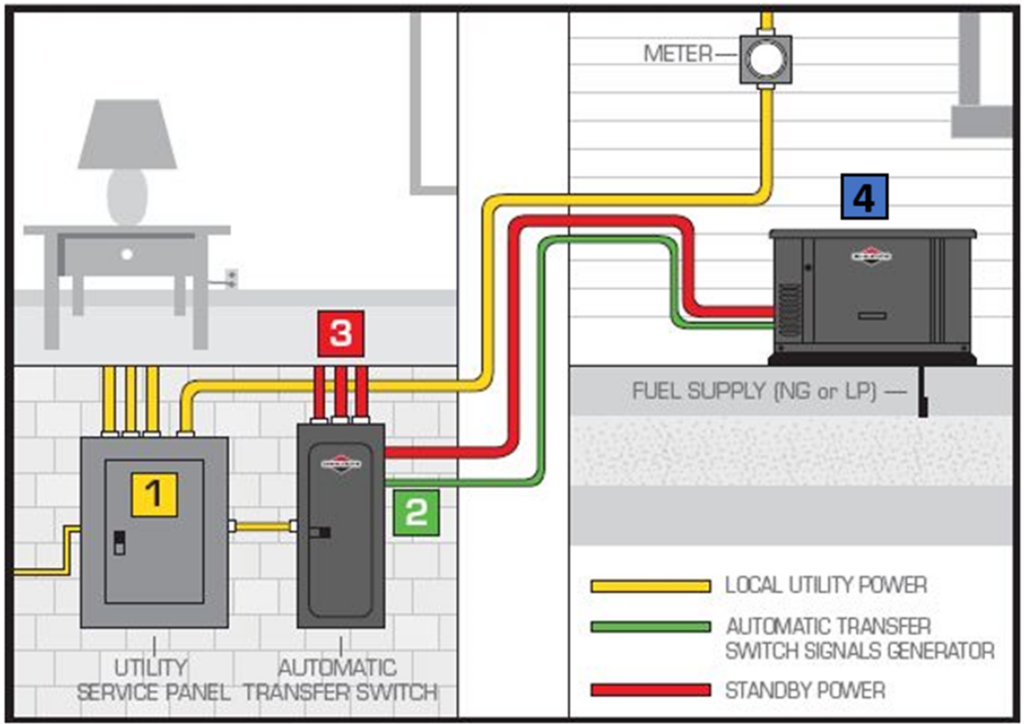
Standby generators are permanently installed outside your home, much like a central air conditioner. They’re connected directly to your electrical panel and a fuel source — usually natural gas or propane — and start automatically within seconds of an outage.
These systems offer the highest level of convenience and reliability. They’re ideal for homeowners who want hands-off protection, especially in areas prone to long or frequent outages.
3. Inverter Generators
Inverter generators deliver cleaner, more stable power than traditional models, making them safer for sensitive electronics like laptops, TVs, and medical devices. They’re also quieter and more fuel-efficient, though generally lower in wattage output.
The Role of the Transfer Switch
No matter which type of generator you choose, a transfer switch is essential. This device safely connects your generator to your home’s electrical system and prevents dangerous backfeeding into utility lines, which can injure line workers and damage your equipment.
Manual transfer switches require you to flip a switch when the power goes out, while automatic transfer switches detect the outage and connect the generator on their own. Always have a licensed electrician handle the installation.
Key Benefits of a Generator Backup System
- Safety and security: Keep lights, security systems, and medical equipment running without interruption.
- Food preservation: Avoid hundreds of dollars in spoiled groceries when your refrigerator and freezer stay powered.
- Comfort: Maintain heating and cooling during extreme weather, when outages are most dangerous.
- Business continuity: Protect revenue, data, and inventory by keeping operations running during a blackout.
- Home value: A properly installed standby generator can increase your property’s resale value and appeal.
How to Size Your Generator
Choosing the right size generator is one of the most important decisions you’ll make. Here’s a simple breakdown:
- 3,000–5,000 watts: Essentials only — refrigerator, lights, phone chargers, Wi-Fi router.
- 5,000–7,500 watts: Add a well pump, sump pump, furnace blower, or window AC.
- 7,500–12,000 watts: Cover most household circuits, including central HVAC.
- 12,000+ watts: Whole-home coverage with simultaneous use of major appliances.
Make a list of the appliances you need during an outage, add up their running watts, and factor in startup surge watts for motors. When in doubt, size up — running a generator near its maximum capacity shortens its lifespan.
Installation and Maintenance Tips
Proper installation and routine maintenance are what separate a reliable backup system from an unpleasant surprise when you need it most. Follow these best practices:
- Hire a licensed electrician for transfer switch and permanent generator installation.
- Run portable generators outdoors only, at least 20 feet from doors, windows, and vents.
- Change the oil and filters according to the manufacturer’s schedule.
- Test your generator monthly under load to confirm it’s ready.
- Store fuel safely and rotate it to prevent degradation.
- Schedule an annual professional inspection for standby units.
Is a Generator Backup Worth the Investment?
If you’ve ever lost power during a heatwave, a winter storm, or an important workday, you already know the answer. A generator backup is about more than convenience — it’s about protecting your family, your home, and your livelihood when circumstances are at their worst.
Whether you choose a budget-friendly portable unit or a fully automatic whole-home system, the right generator backup delivers something priceless: confidence that the next outage won’t catch you unprepared.